Understanding Bonds in Nigeria: A Beginner’s Guide to Investing in Bonds
Imagine lending money to someone who promises to pay you back later with extra money as a reward for helping them. That is the simplest way to understand a bond.
A bond is one of the safest and most popular investment products in Nigeria and around the world. Governments, companies, and organizations use bonds to raise money for projects, while investors buy bonds to earn steady income.
This guide explains bonds in very simple terms using Nigerian examples and naira-based illustrations.
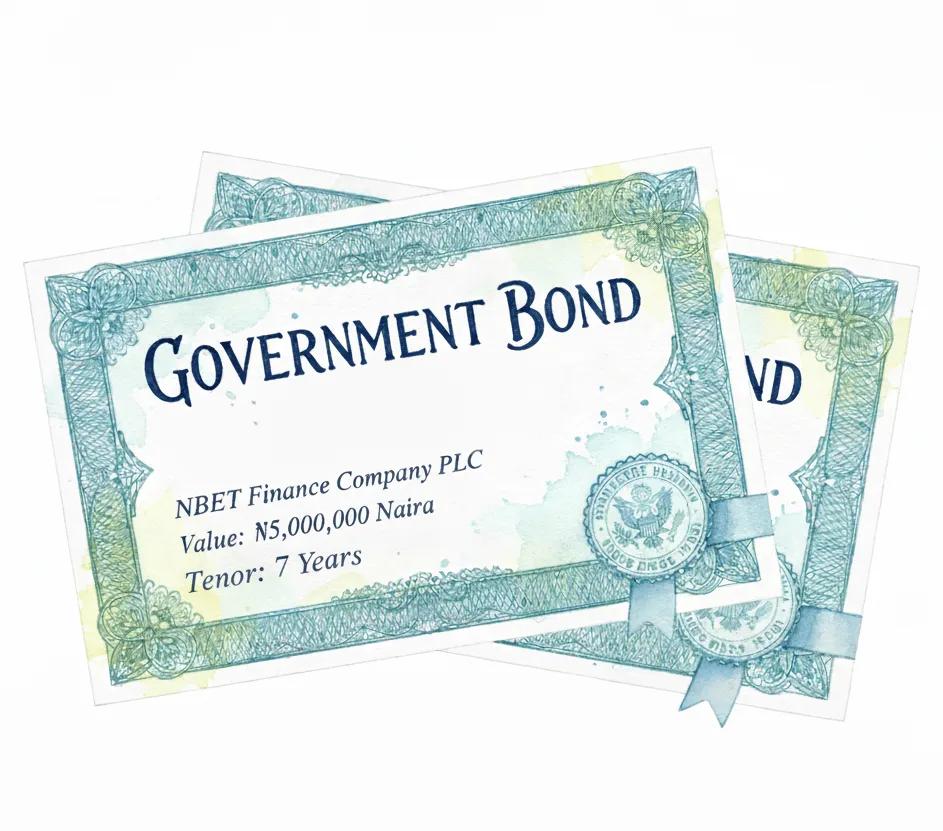
What Is a Bond?
A bond is simply an agreement where:
- You lend money to a government or company
- They promise to pay you interest regularly
- They return your original money after a certain period
When you buy a bond, you are acting like a lender.
Simple Example
Suppose the Federal Government of Nigeria needs money to build roads, railways, or power projects. Instead of borrowing from only banks, the government can ask Nigerians to lend money through bonds.
You buy a bond worth N100,000, the government may promise to:
- Pay you N9,000 every year as interest
- Return your N100,000 after 5 years
That yearly payment is called a coupon or interest payment.
Difference Between Bonds and Stocks
Many beginners confuse bonds with stocks, but they are different.
| Bonds | Stocks |
|---|---|
| You are lending money | You are buying ownership |
| You earn fixed interest | You earn dividends if declared |
| Lower risk | Higher risk |
| More stable income | Prices move more |
| You do not own the company | You own part of the company |
Nigerian Example
If you buy shares of Company A:
- You become part-owner of the company
- Your profit depends on company performance
If you buy a Federal Government Bond:
- You are lending money to the government
- You receive fixed interest payments
Related
Nigerian Exchange Group Plc Q1 2026 Performance: A Strong Signal for Nigerian Investors.
Difference Between Bonds and Bank Loans
Bonds and loans are similar because both involve borrowing money.
The main difference is:
| Bond | Loan |
|---|---|
| Money comes from many investors | Money usually comes from one bank |
| Can be traded on the market | Usually cannot be traded easily |
| Public investment product | Private agreement |
Nigerian Example
Loan Example
A company borrows N5 billion from a commercial bank.
Bond Example
The same company raises N5 billion by selling bonds to thousands of Nigerian investors.
Characteristics of a Bond
Every bond has certain important features.
1. Face Value
This is the amount the issuer promises to repay.
Example:
- N100,000 bond
2. Coupon Rate
This is the interest rate paid to investors.
Example:
- 10% annual interest
- N10,000 yearly payment on N100,000 bond
3. Maturity Date
This is when your money will be returned.
Example:
- 3 years
- 5 years
- 10 years
4. Issuer
The organization borrowing the money, examples include:
- Federal Government of Nigeria
- State governments
- Banks
- Companies
5. Risk Level
Some bonds are safer than others.
Generally:
- Government bonds = safer
- Company bonds = riskier
Who Can Issue Bonds?
Many entities can issue bonds.
Governments
Examples:
- Federal Government of Nigeria (FGN Bonds)
- Lagos State Government Bonds
Companies
Examples:
- Insurance companies
- Construction companies
- Banks and manufacturing companies
Government Agencies
Some public institutions can also issue bonds for projects.
How Bonds Work
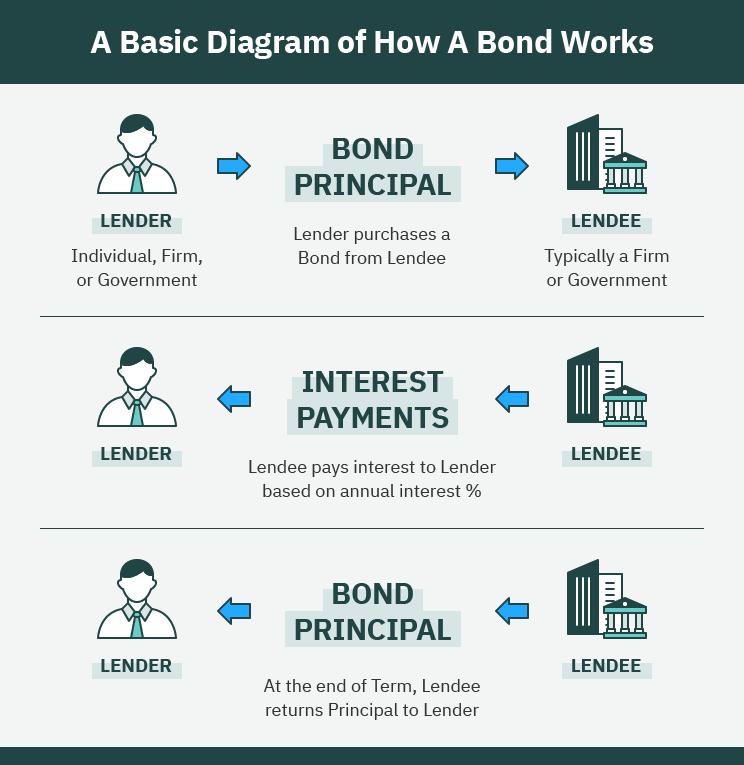
Let us simplify it step-by-step.
Step 1: Issuer Needs Money
The government wants to build a new highway costing N500 billion.
Step 2: Bond Is Created
The government issues bonds to investors.
Each bond may cost:
- N10,000
- N50,000
- N100,000
Step 3: Investors Buy Bonds
People, pension funds, banks, and companies buy the bonds.
Step 4: Interest Is Paid
Every year, investors receive interest.
Step 5: Bond Matures
At the end of the agreed period:
- Investors receive their original money back
Components of a Bond Contract
A bond contract contains important details.
Principal
The original money borrowed.
Coupon Rate
The interest percentage paid.
Maturity Date
The repayment date.
Payment Schedule
How often interest is paid.
Examples:
- Monthly
- Quarterly
- Annually
Covenants
Rules and promises the issuer must follow.
Factors to Consider Before Buying Bonds
Before investing in bonds, investors consider several things.
1. Safety
Can the issuer repay the money?
FGN bonds are generally considered safer in Nigeria.
2. Interest Rate
Higher interest may mean higher risk.
3. Inflation
If inflation is higher than bond interest:
- Your real earnings reduce
Example:
- Bond pays 10%
- Inflation is 25%
- Your purchasing power still falls
4. Maturity Period
Longer bonds usually carry more risk.
5. Liquidity
Can you sell the bond easily before maturity?
Factors That Determine Bond Interest Rates
Interest rates are influenced by several things.
1. Inflation
Higher inflation usually leads to higher bond yields.
2. Central Bank Policy
When the Central Bank of Nigeria raises rates:
- Bond interest rates often rise too
3. Risk Level
Riskier issuers pay higher interest.
4. Economic Conditions
Weak economies may affect investor confidence.
5. Demand and Supply
If many investors want bonds:
- Interest rates may fall
Types of Bonds in Nigeria
There are different kinds of bonds.
1. Federal Government Bonds
Issued by the Nigerian government.
Examples:
- FGN Savings Bond
- FGN Sukuk Bond
These are among the safest investments in Nigeria.
2. Corporate Bonds
Issued by companies.
Example:
- MTN Nigeria bond
- Bank bonds
3. State Government Bonds
Issued by Nigerian states/ sub nationals.
Example:
- Lagos State Bond
4. Sukuk Bonds
Islamic-compliant bonds that avoid traditional interest structures.
Nigeria has used Sukuk to fund roads.
Categories of Bonds
Bonds can also be grouped differently.
Short-Term Bonds
Usually mature within 1–3 years.
Medium-Term Bonds
Usually 3–10 years.
Long-Term Bonds
Can last 10–30 years.
Different Bond Structures
Not all bonds work the same way.
Fixed Rate Bonds
Interest remains constant.
Example:
- 12% yearly throughout the bond period
Floating Rate Bonds
Interest changes over time.
Zero-Coupon Bonds
No regular interest payments.
Instead:
- Investors buy at a discount
- Receive full value later
Example:
- Buy for N80,000
- Receive N100,000 at maturity
Callable Bonds
Issuer can repay earlier than expected.
Bond Pricing Explained
Bond prices move up and down and this confuses many beginners.
Why Bond Prices Change
Bond prices mainly change because of interest rates.
Example
Suppose you own a bond paying:
- 10% interest
Later, new bonds offer:
- 18% interest
Your old bond becomes less attractive.
To sell it:
- You may need to reduce the price
That means bond prices fall when interest rates rise.
Why Do Investors Buy Negative Yielding Bonds?
This sounds strange but happens globally, a negative-yield bond means:
- Investors may receive less money than they invested
So why buy them?
i. Safety
Some investors prioritize safety over profit.
Example:
- Large pension funds
- Insurance companies
ii. Economic Fear
During crises, investors prefer safe assets even with low returns.
iii. Currency Expectations
Some investors expect currency gains elsewhere.
iv. Regulations
Some institutions are legally required to hold government bonds.
Why Bonds Matter in Nigeria
Bonds help Nigeria:
- Build infrastructure
- Finance budgets
- Develop capital markets
For investors, bonds provide:
- Stable income
- Lower risk
- Portfolio diversification
Beginner Tips Before Investing in Bonds
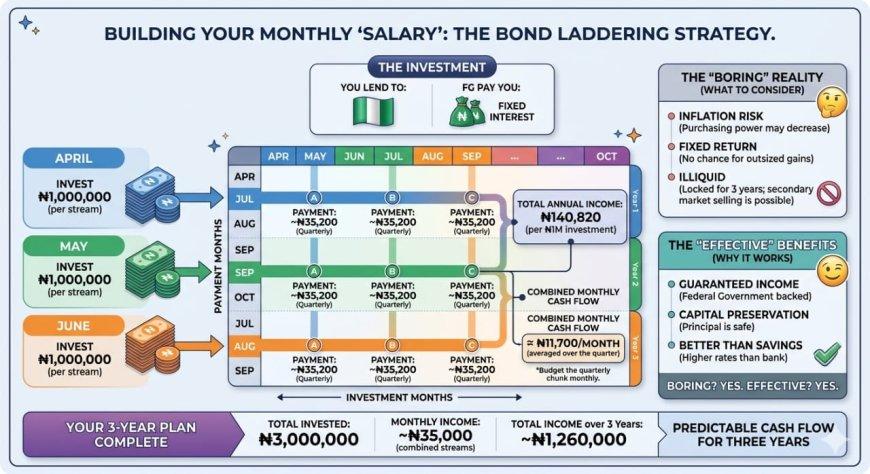 If you are new to bonds:
- Start with Federal Government bonds
- Understand inflation impact
- Compare yields carefully
- Know the maturity period
- Avoid investing all your money in one bond
Conclusion
Bonds are one of the simplest and safest ways to invest money, especially for beginners seeking stable returns.
In Nigeria, bonds play a major role in:
- Government financing
- Infrastructure development
- Wealth preservation
Understanding how bonds work helps investors make smarter financial decisions and build more balanced investment portfolios.
Whether you are investing N10,000 or N10 million, learning the basics of bonds is an important step toward financial literacy and long-term wealth creation.